Nine chapters
Nine moments where sea, mountain
and people met.
593 / The founding legend
The island itself was the god
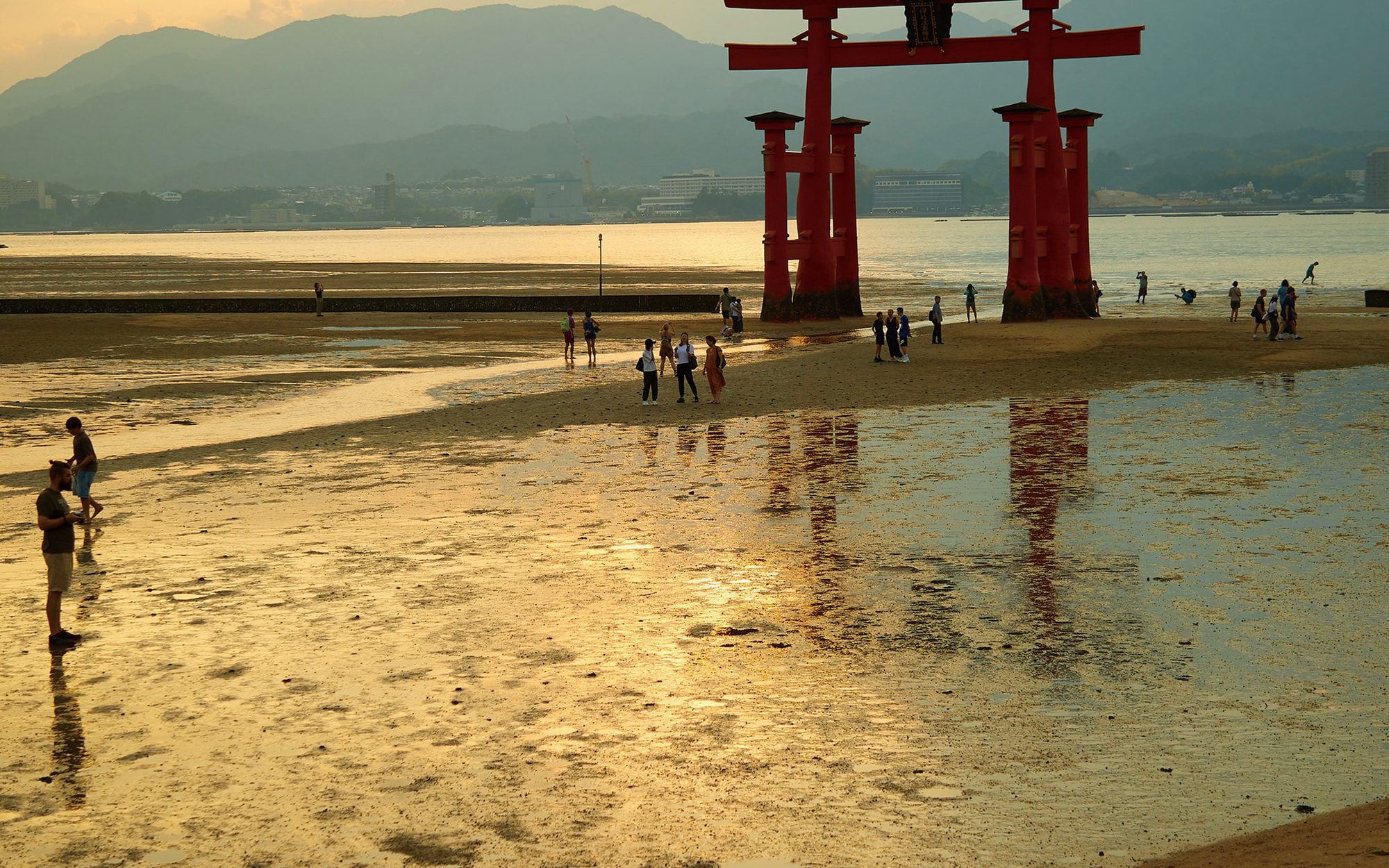
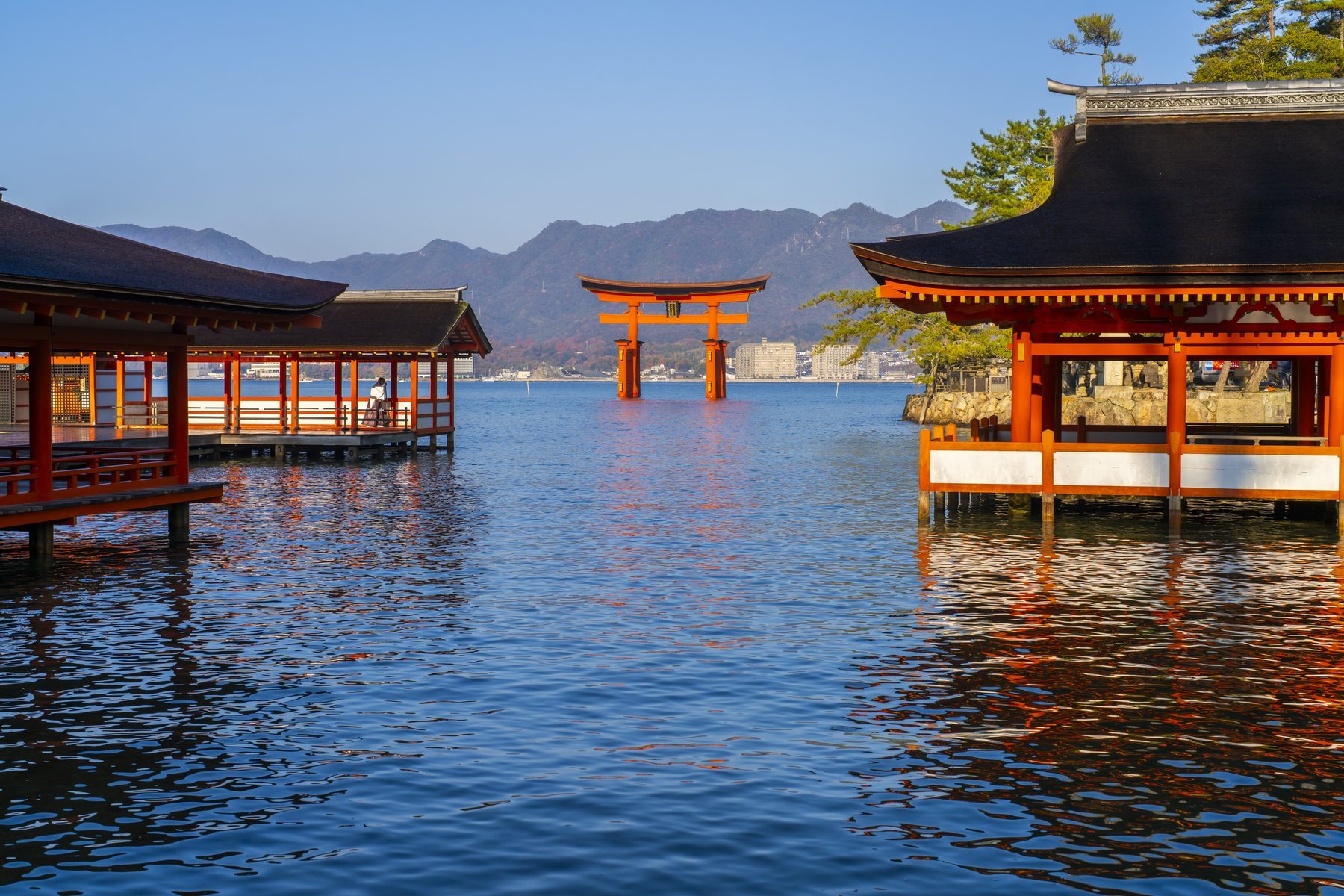
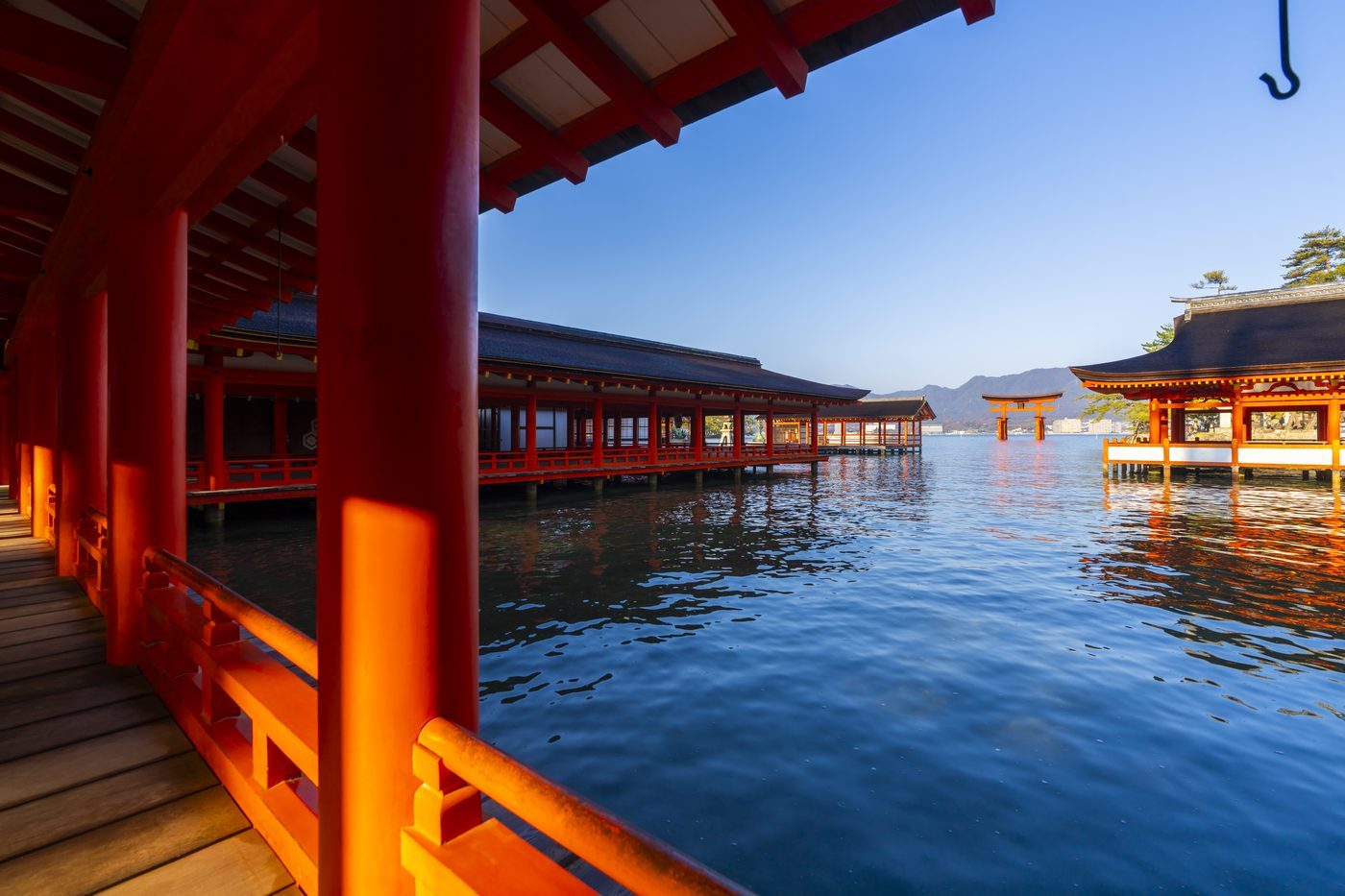
The shrine's own account places its founding in 593, the year Empress Suiko took the throne. Saeki no Kuramoto, who governed the island, received a divine command and, guided by a sacred crow, went around the island's shores to choose a spot where the tide comes and goes. There he built the shrine. Its deities are three goddesses. Treating the whole island as sacred, the founders built on the tidal beach rather than on land, and that choice still shapes what you see today.
Source: the shrine's own history (the founding year is tradition, not record)
806 / Kukai and Mt. Misen
A fire on the mountain that never went out
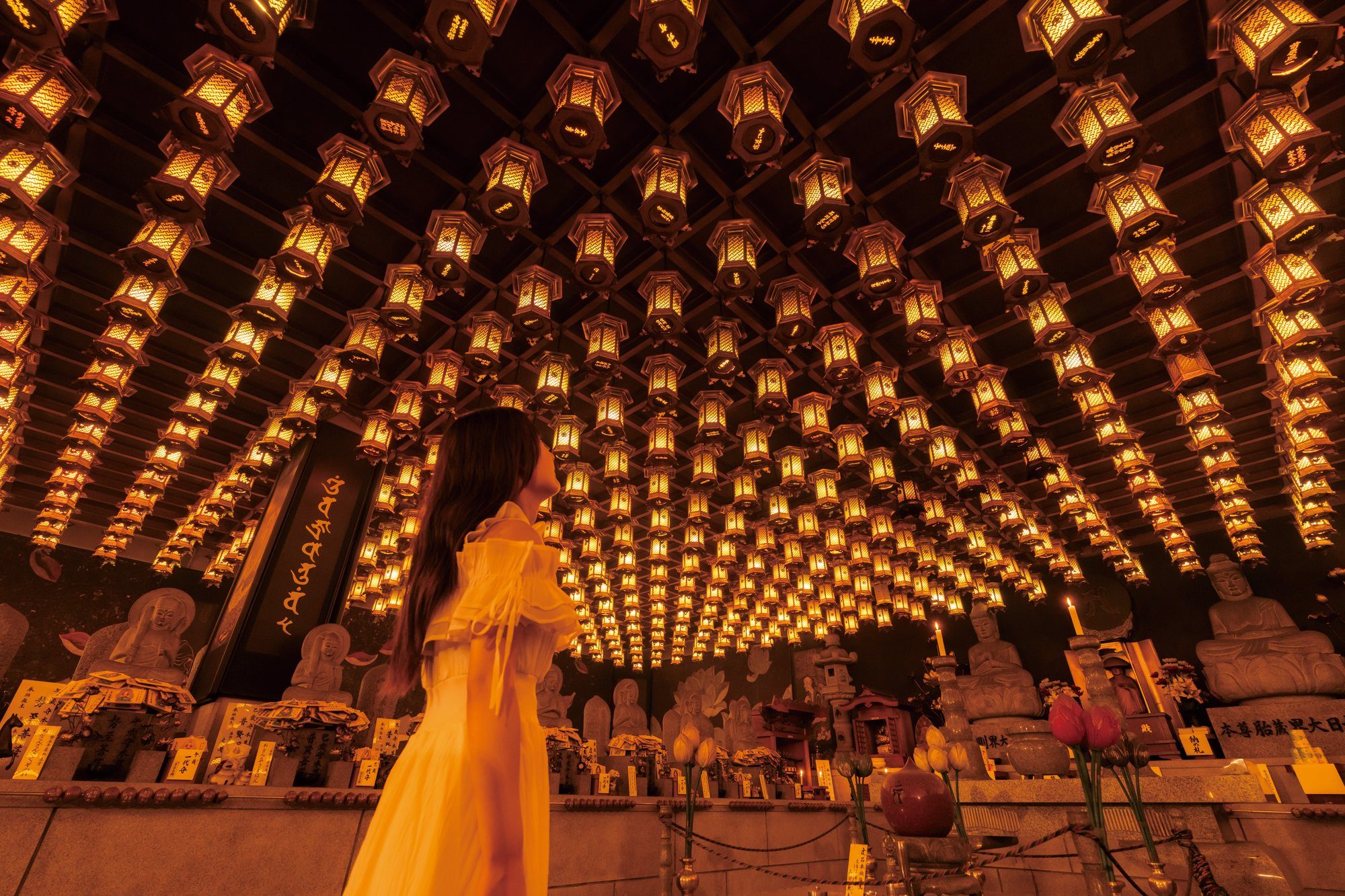
In 806, the monk Kukai, back from Tang China, crossed to Miyajima and trained on Mt. Misen, the island's highest peak. That is the beginning of Daisho-in, the oldest temple on the island. In the Reikado hall near the summit burns a flame said to have been kept alight since Kukai's time; people call it the fire that never goes out. Daisho-in also records that Ito Hirobumi, the Meiji statesman, loved the view from the summit and paid for the trail that climbers use today. A shrine on the sea and a temple on the mountain: Miyajima's faith has always lived in both.
Source: Daisho-in, “About Daisho-in” and “About Mt. Misen”
1168 / Taira no Kiyomori
The culture of the capital, built on the water
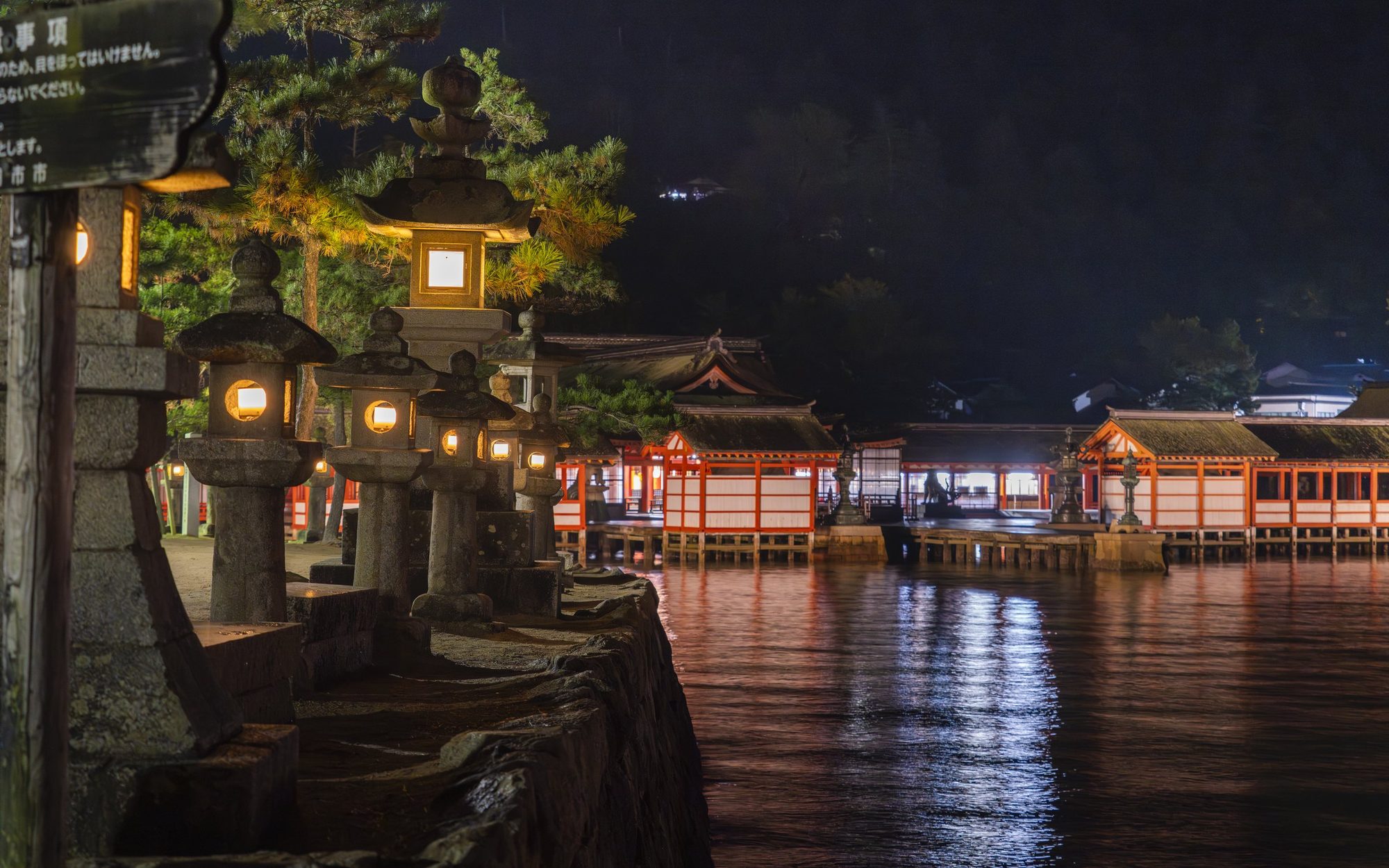
In 1168 Taira no Kiyomori, then governor of Aki, rebuilt the shrine in the shinden style of the Kyoto aristocracy. The shape of the shrine you see today was set then. Retired Emperor Go-Shirakawa visited in 1174 and Retired Emperor Takakura in 1180, bringing the court's culture to the island. The great bell in the Misen main hall, a national Important Cultural Property, was donated by Kiyomori's son Munemori.
Source: the shrine's own history; Daisho-in, “About Mt. Misen”
1407 / Muromachi
Pagodas rise, and the prayers pile up
Devotion did not fade when the Taira fell to the Minamoto. In the Muromachi period the shoguns Ashikaga Takauji and Yoshimitsu were among the faithful. The five-storey pagoda, a little over 29 m tall, went up in 1407; the Zen monk Shukan built the two-storey Tahoto in 1523. Both are Important Cultural Properties and still look down from the hill onto the shrine in the sea. In the age of the warring states the Ouchi family, and then the Mori, held the island in deep reverence.
Source: Itsukushima Shrine, “Cultural properties and buildings”
1555 / The Battle of Miyajima
Mori Motonari opens his road to power on the island
On 1 October 1555, Mori Motonari surprised and defeated Sue Harukata on this island; Harukata took his own life. The victory gave Motonari the provinces of Suo and Nagato and made him the greatest warlord of western Japan. Having made a battlefield of the sacred island, Motonari went on to revere the shrine deeply, as the shrine's own history records. The shrine on the water survives in its present form partly because the victor chose to protect it.
Source: Encyclopedia Nipponica and Britannica (via Kotobank, “Battle of Itsukushima”); the shrine's own history
1587 / Toyotomi Hideyoshi
Unfinished for four hundred years
In 1587 Toyotomi Hideyoshi vowed to build a great sutra hall for the reading of a thousand sutras, and had the monk Ankokuji Ekei build it. After Hideyoshi's death the ceiling boards and the outer walls were never finished, and so it stands today. Known for its size as Senjokaku, “the hall of a thousand mats”, it became Hokoku Shrine, dedicated to Hideyoshi, in 1872. Still unfinished, it has looked down on the sea for over four centuries.
Source: Itsukushima Shrine, “Subsidiary shrines: Hokoku Shrine”
1875 / The eighth great torii
Standing in the sea by its own weight
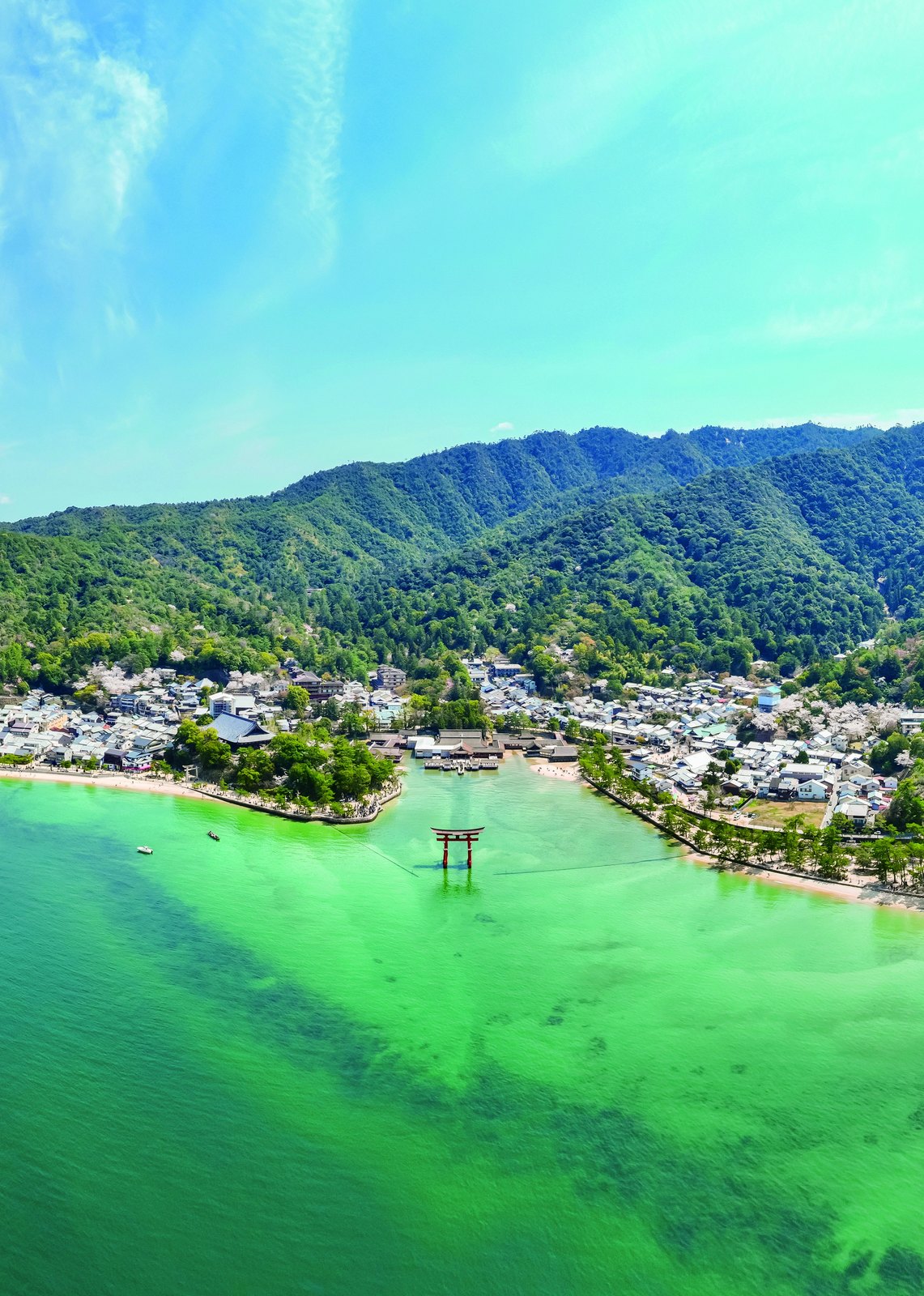
The present great torii was rebuilt in 1875, the eighth since the Heian period. It is about 16.6 m tall and weighs about 60 tons; the crossbeam is 24.2 m long. The main pillars are natural camphor trunks, and the gate is not buried in the seabed: it stands on the beach by its own weight alone. Between June 2019 and December 2022 the roof was re-thatched, the gate repainted and parts repaired, giving it the look it has today.
Source: Ministry of Land, Infrastructure, Transport and Tourism, “Minato Oasis Miyajima”; Itsukushima Shrine, “Construction status”
1996 / World Heritage
One of Japan's three great views, now the world's
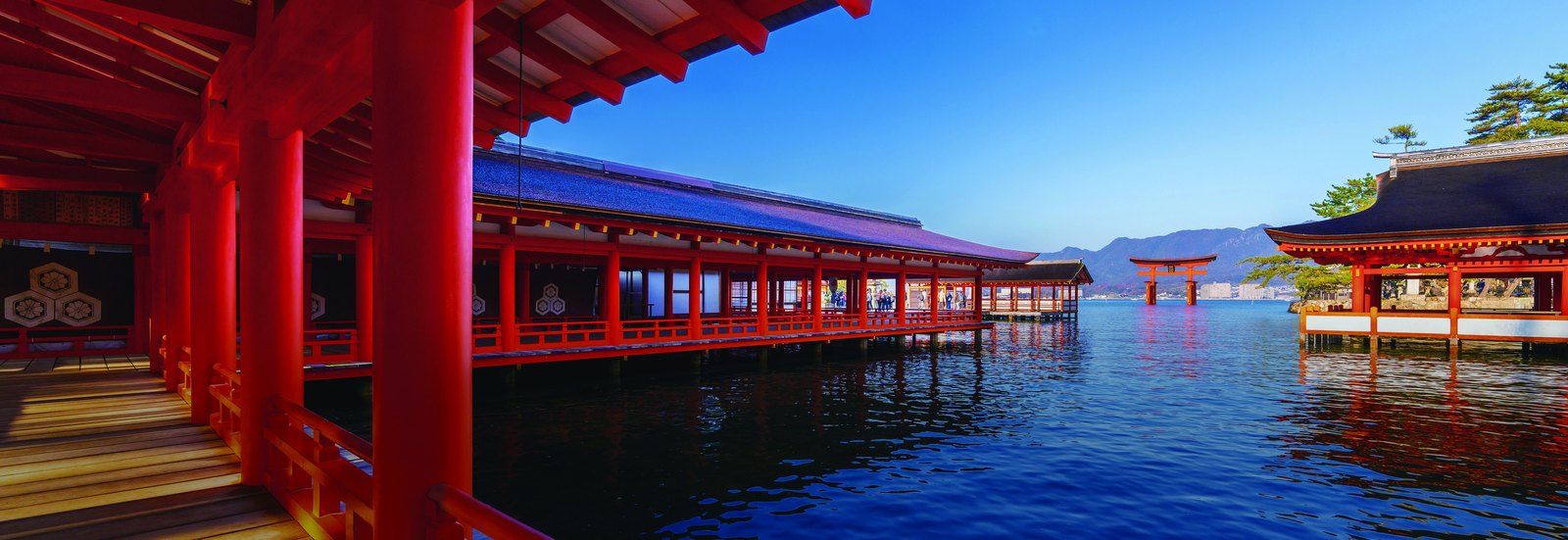
Aki no Miyajima, one of the Three Views of Japan alongside Matsushima and Amanohashidate, was inscribed on UNESCO's World Heritage list in 1996. Six buildings are National Treasures: the main sanctuary with its offering and worship halls and purification hall, the Marodo subsidiary shrine, and the east and west corridors; eleven more buildings and three structures are Important Cultural Properties. The corridor floorboards are laid with gaps so that storm tides pass through. The wisdom of living with the sea is built into the wood.
Source: the shrine's own history and cultural properties; Agency for Cultural Affairs, World Heritage list
Now / A prayer that continues
Cherished for another thousand years
At the Kangensai, held on the 17th day of the sixth month of the old calendar, court music is played aboard a sacred barge on the sea: one of Japan's three great boat festivals, a pastime of Kiyomori's capital still alive on the water. The shrine opens every day at 6:30 and closes between 17:00 and 18:30 depending on the season. If you stay on the island, you can walk the empty corridors as the gates open. The next chapter of these fourteen centuries belongs to those who stay.
Source: Itsukushima Shrine, “Subsidiary shrines”, “Hours and admission”
Dates and figures on this page follow the official materials of Itsukushima Shrine, Daisho-in, the Agency for Cultural Affairs and the Ministry of Land, Infrastructure, Transport and Tourism, and encyclopaedias such as Nipponica. Anything described as tradition or as “said to” is not settled by historical record.